
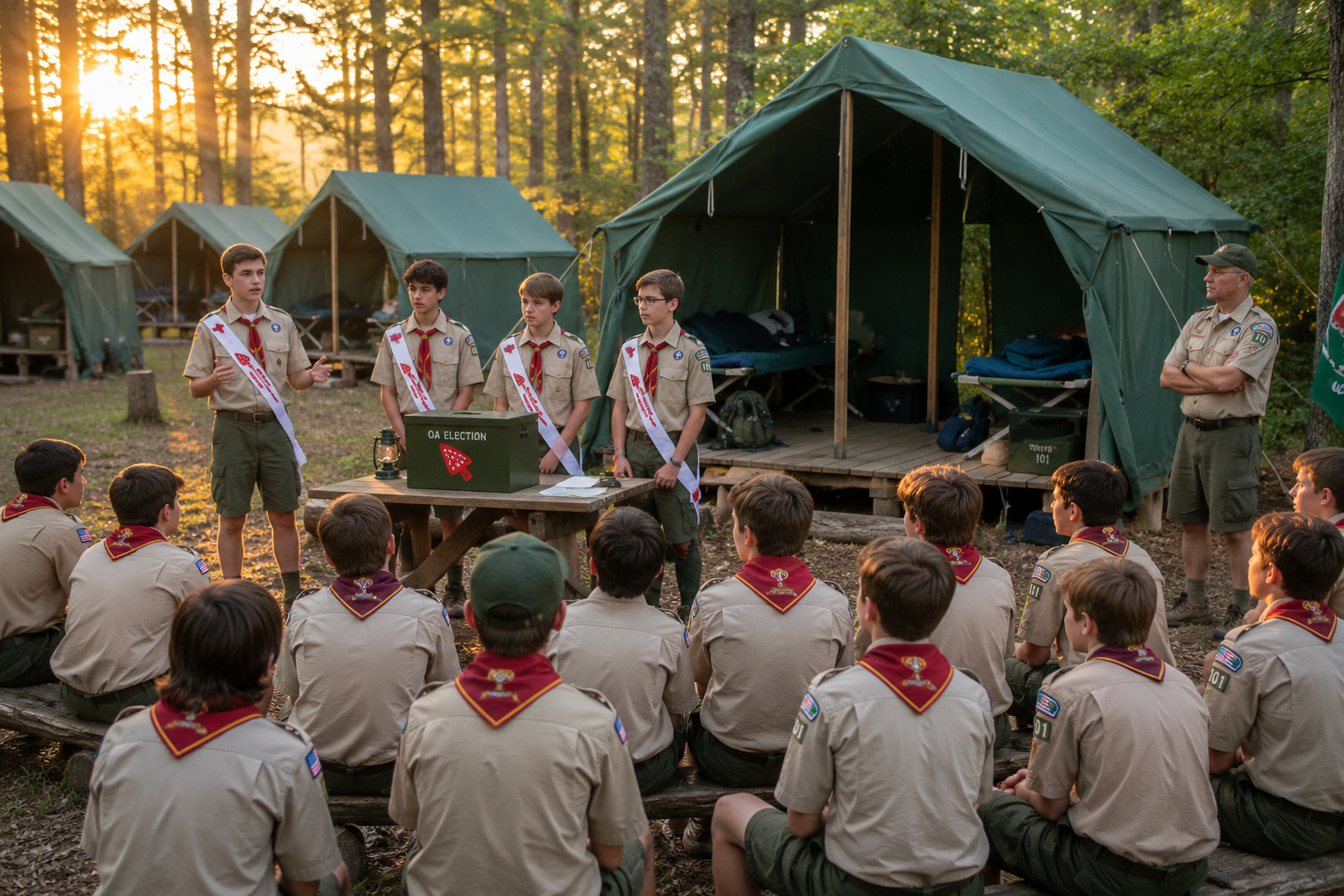
Running OA elections in a large troop requires preparation to ensure Scouts do not just vote for familiar names. Troops can help by explaining the purpose of the Order of the Arrow early, encouraging thoughtful voting, and making sure new Scouts understand when abstaining may be the most appropriate choice.
Order of the Arrow elections are meant to be meaningful. They give Scouts the opportunity to recognize fellow youth members who live the Scout Oath and Law, serve others cheerfully, and set a strong example within the troop.
But running OA elections in a large troop can be challenging. I know this firsthand. My name is Jeff Pastorius. As an Eagle Scout who now volunteers as an adult leader, I have been a part of both small, tight-knit troops and massive units with over 70 Scouts.
I have also been a member of the Order of the Arrow since 1996, and I was deeply humbled to be selected for the Vigil Honor in 2002. Over the decades, I have watched the election process from every angle and seen how differently these votes play out depending on the size of the unit.
In a smaller troop, most Scouts know each other well. They have camped together, worked together, watched each other lead, and seen who helps when no one is asking. When it is time to vote, they can usually connect each name on the ballot with real experiences.
In a large Scout troop, that is not always the case.
When a troop has 70 or more Scouts, plus a group of brand-new Scouts who may have crossed over only a month or two earlier, the election can feel very different. A ballot may include 10, 15, or even more eligible candidates.
Some Scouts may recognize only one or two names. Others may know candidates from their own patrol but not from another patrol. Newer Scouts may not know the older Scouts well enough to understand who has been serving quietly behind the scenes.
From my own experience in a large troop, I have seen years where 15 or more Scouts were eligible for the Order of the Arrow, but only two or three were elected. That does not automatically mean the other Scouts were not worthy. In many cases, it may mean the voting Scouts simply did not know them well enough.
That is the issue large troops need to think about. OA elections should never become a popularity contest. At the same time, if Scouts do not know the candidates, name recognition can quietly influence the outcome.
This article is not about changing OA election rules or telling Scouts who to vote for. It is about helping large troops prepare better so youth voters understand the purpose of the election and can make informed choices.
Key takeaways
Here are the most important strategies to keep in mind when preparing your large Scout troop for an upcoming Order of the Arrow election.
- Start educating your troop about the Order of the Arrow well before election night to build understanding.
- Help Scouts realize that they can vote for every eligible candidate they believe is worthy of recognition.
- Explain clearly that abstaining is a responsible choice for newer Scouts who do not yet know the candidates.
- Foster a year-round culture of cheerful service so that worthy but quiet Scouts are recognized by their peers.
Table of Contents
Why OA elections feel different in a large Scout troop
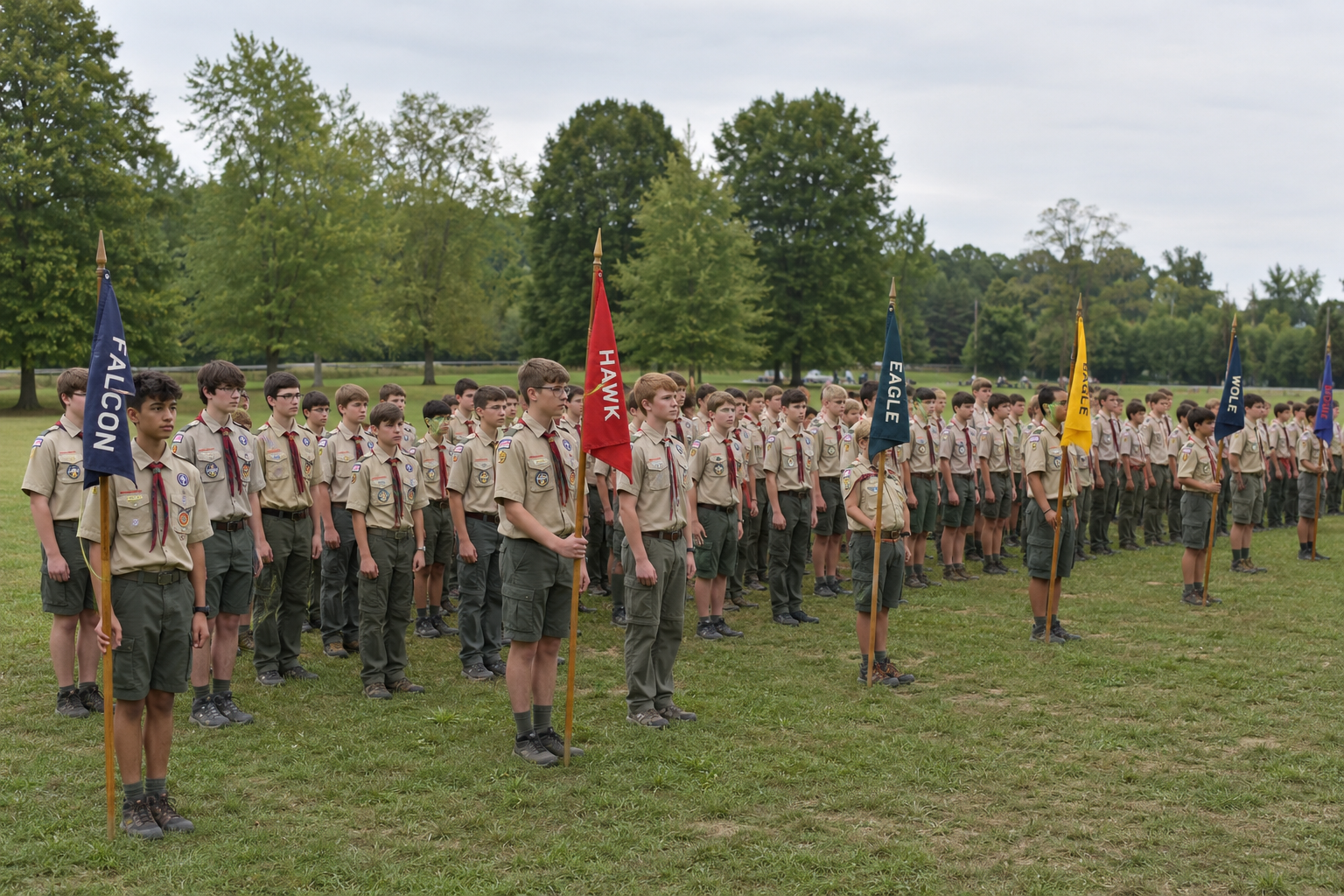
OA elections feel different in a large Scout troop because not every Scout knows every eligible candidate. In a troop of 50 or more youth, Scouts may naturally know their patrol, their friends, and a few visible youth leaders, but not everyone on the ballot.
That matters because an Order of the Arrow election depends on youth recognition.
Scouts are being asked to identify peers who live the Scout Oath and Law. They are not just choosing friends. They are not just selecting the loudest or most visible Scouts. They are being asked to think about character, service, leadership, and example.
In a smaller troop, those qualities may be easier to observe across the whole unit. In a larger troop, the experience can be more fragmented.
A new Scout may have only attended a handful of meetings and one campout. A younger Scout may know the troop guide but not the quartermaster. A Scout in one patrol may have never cooked, hiked, or worked on a service project with a candidate from another patrol.
That does not make the election unfair by itself. But it does mean large troops need to be more intentional. If the only time Scouts hear the candidate names is during the election, the troop may be asking them to make a character-based decision without enough context.
The biggest challenge with OA elections in a large troop
The biggest challenge is the gap between name recognition and worthiness, especially when a troop receives 15 to 20 new Scouts just two or three months before the election.
A Scout may be highly visible and well known, while another Scout may be equally or more deserving but less familiar to younger members of the troop. This can create a real problem.
A Scout may vote for the candidate they know from school, the older Scout who tells jokes at meetings, or the patrol leader they see every week. Meanwhile, another eligible Scout may be the one who quietly loads the trailer, helps younger Scouts finish cleanup, teaches skills patiently, or stays late to make sure gear is put away correctly.
Both Scouts may be worthy. But if only one is known, only one may receive votes.
This is especially important when there are many eligible candidates. A long ballot can be overwhelming. If a Scout sees 15 names and only recognizes three, they may vote for only those three.
That may feel responsible from their perspective. They may think, “I should not vote for someone I do not know.”
That instinct is understandable. Scouts should not vote blindly. But if the troop has not helped Scouts get to know each other throughout the year, the election may unintentionally favor popularity, visibility, or patrol familiarity over a fuller picture of service and character.
Large troops should not try to force a result. But they should create a better environment for thoughtful voting.
Explaining the purpose and process of the vote
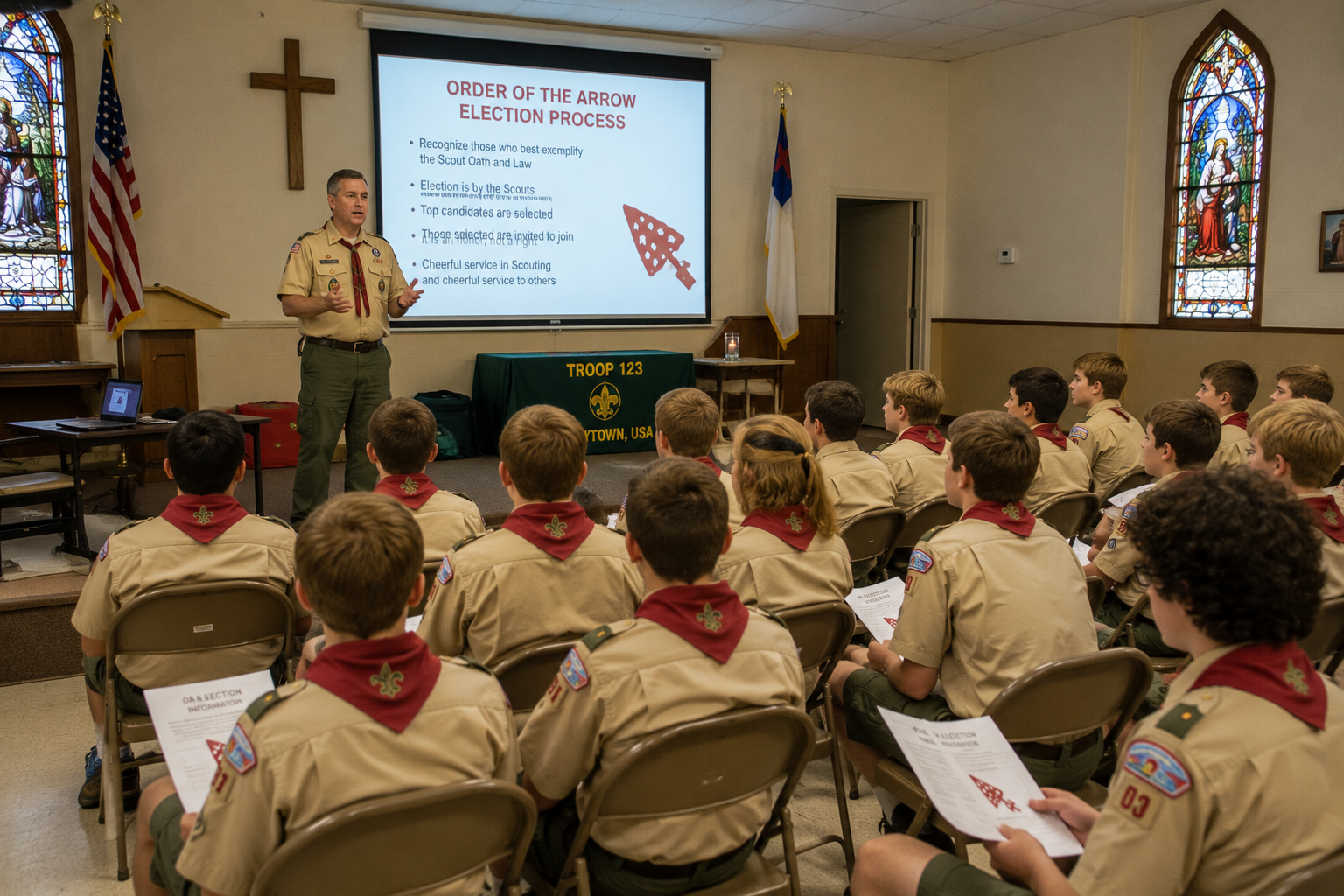
A troop should explain that an OA election is about recognizing Scouts who live the Scout Oath and Law through cheerful service, leadership, and example. It is not a vote for best friend, most popular Scout, or most entertaining person in the room.
This explanation should happen before election night.
The Order of the Arrow is Scouting’s honor society, but it has a very unique election process: both current OA members and non-members are allowed to vote. Every registered youth member of the troop who is present gets a ballot.
Because the entire troop decides who is recognized, it is critical that all voters—especially non-members and younger Scouts—understand what the Order of the Arrow stands for. If they do not know what the OA is, why the election matters, or what qualities they should be thinking about, they cannot make an informed choice.
A helpful explanation to the troop might sound like this:
“Tonight is not about voting for your closest friends. It is about thinking about which eligible Scouts best live the Scout Oath and Law. Think about who helps others, who serves cheerfully, who sets a good example, and who makes the troop better.”
That type of message does not tell Scouts how to vote. It helps them understand what the vote means.
How should Scouts think about voting in an OA election?
Scouts should understand that an OA election is not a popularity contest. It is a chance to recognize eligible Scouts who have already met the requirements to appear on the ballot and who, in the opinion of the voters, live up to the ideals of the Order of the Arrow.
When a Scout’s name appears on the OA ballot, that Scout did not get there by accident. The unit leader has already reviewed eligibility, including rank, camping, participation, and Scout spirit.
In other words, every Scout listed on the ballot has met the basic requirements to be considered by the troop.
It is also important for Scouts to understand that the Scoutmaster or unit leader plays a significant role before the election ever takes place. A Scout who consistently fails to live by the Scout Oath and Scout Law, creates ongoing discipline problems, or does not demonstrate the level of Scout spirit expected for OA membership should not simply be placed on the ballot.
The unit leader reviews eligibility, including Scout spirit, before certifying candidates for election. As a result, Scouts can generally assume that every name appearing on the ballot has already been reviewed and approved as a legitimate candidate for consideration.
That does not mean every voter must automatically vote for every candidate. The election still belongs to the youth members. Scouts should vote thoughtfully and honestly.
But in a large troop, it is helpful to explain the ballot in a way that keeps Scouts from treating it like a race where they are supposed to choose only one or two people.
A good way to explain it is:
“You are not voting for the most popular Scout. You are not choosing only your best friend. Every Scout on this ballot has met the eligibility requirements to be considered for the Order of the Arrow. Your Scoutmaster or unit leader has already reviewed the candidates for eligibility, including Scout spirit. If you believe these Scouts live up to the Scout Oath and Law and will continue in cheerful service, you may vote for all of them. If you truly believe a candidate does not live up to those ideals, then you should not vote for that candidate.”
That framing helps Scouts understand the seriousness of the vote without pressuring them to vote for or against anyone.
It also helps correct a common misunderstanding. Some Scouts may think they are supposed to pick only the “top” candidate or choose just one or two names. In reality, OA elections are not designed like a single-winner contest. More than one Scout can be elected when they receive enough support from the youth members who turn in ballots.
Why rank advancement and peer recognition are different
Over my decades in the program, I have seen many dedicated Scouts earn the Eagle rank but never be elected to the Order of the Arrow. Sometimes, this confuses newer Scouts or parents.
They might assume that if a Scout has reached the highest rank in Scouting, they automatically belong in the honor society. But earning the Eagle rank and being elected to the OA measure two different things.
Earning the Eagle rank is an incredible individual achievement. It shows a Scout has successfully completed a set of demanding requirements, earned a specific number of merit badges, and planned and led a service project.
The Order of the Arrow, on the other hand, is entirely about peer recognition of daily character. It asks whether a Scout lives the Scout Oath and Law through cheerful service to others.
Simply earning a high rank is not an automatic qualification for the OA. If a Scout completes their rank requirements but does not demonstrate that spirit of unselfish service to the troop, their peers may choose not to elect them. That is exactly why the youth vote is so important—it gives the youth the voice to recognize true servant leadership.
Why rank advancement and peer recognition are different
Over my decades in the program, I have seen many dedicated Scouts earn the Eagle rank but never be elected to the Order of the Arrow. Sometimes, this confuses newer Scouts or parents.
They might assume that if a Scout has reached the highest rank in Scouting, they automatically belong in the honor society. But earning the Eagle rank and being elected to the OA measure two different things.
Earning the Eagle rank is an incredible individual achievement. It shows a Scout has successfully completed a set of demanding requirements, earned a specific number of merit badges, and planned and led a service project.
The Order of the Arrow, on the other hand, is entirely about peer recognition of daily character. It asks whether a Scout lives the Scout Oath and Law through cheerful service to others.
Simply earning a high rank is not an automatic qualification for the OA. If a Scout completes their rank requirements but does not demonstrate that spirit of unselfish service to the troop, their peers may choose not to elect them. That is exactly why the youth vote is so important—it gives the youth the voice to recognize true servant leadership.
Why an “all Scouts” option can help large troops
An “all Scouts” or “all of the above” option on the ballot can help large troops avoid confusion, especially when many candidates are eligible.
In a large troop, some Scouts may not realize they are allowed to vote for more than one candidate. Others may think selecting every name is somehow wrong, even if they believe all the candidates are worthy.
A clear “all eligible candidates” option can help reduce that confusion.
This option should still be explained carefully. It should not mean “vote for everyone no matter what.” It should mean, “I believe all listed candidates are worthy of election.”
For example, a ballot option could say:
- All eligible candidates listed above
That wording is simple and clear. It helps Scouts who believe every candidate on the ballot lives up to the Scout Oath and Law select all names without feeling like they are doing something improper.
Troops should coordinate with their local OA election team before changing ballot formatting or adding this type of option. The election should always follow current lodge and national OA procedures.
Sample wording to use before a large-troop OA election
Before the election team begins the official voting process, it can help for the unit leader or OA election team to set the right tone. The wording should be simple, neutral, and focused on the ideals of the Order of the Arrow.
Here is one possible version:
“Tonight’s OA election is not a popularity contest. You are not being asked to vote only for your closest friends or only for the Scouts you know best. Every Scout listed on the ballot has met the eligibility requirements to be considered for the Order of the Arrow. The Scoutmaster or unit leader has also reviewed the candidates for eligibility, including Scout spirit.
As you vote, think about the Scout Oath and Scout Law. Think about brotherhood, cheerfulness, and service. If you believe a candidate is worthy and will continue to serve the troop unselfishly, you may vote for that Scout. If you believe all of the candidates are worthy, you may vote for all of them. If you truly believe a candidate does not live up to those ideals, then do not vote for that candidate.
If you are new to the troop or do not know the candidates well enough to vote wisely, you may abstain by not turning in a ballot. That is better than turning in a ballot with only one or two names selected simply because those are the only names you recognize.”
This type of explanation helps Scouts understand three important things:
- They may vote for more than one candidate.
- They may vote for all candidates they believe are worthy.
- They may abstain if they do not know the candidates well enough to vote wisely.
That is especially important in a large troop where many younger Scouts may not understand how their ballot affects the outcome.
How should a troop handle a long OA ballot?
A troop should handle a long OA ballot with clear instructions, enough time, and a calm meeting environment. Scouts need to understand the process before they vote, especially when many names are listed.
A long ballot can be intimidating.
If a Scout sees a large list of eligible candidates, they may assume they should only vote for a few. Others may misunderstand how many candidates they are allowed to vote for. Some may rush because the meeting is almost over. Others may follow what their friends are doing instead of thinking for themselves.
Before handing out a long ballot, the election team will also check attendance. For an election to be valid, at least 50% of the registered active youth members must be present. In a large troop, a conflicting school band concert or major sports event can easily drop attendance below that required majority, so it is crucial to schedule the election on a night when a strong turnout is expected.
The election team should explain the rules clearly. The troop should give the election team the room, time, and attention needed to do that well.
Consider these practical steps:
- Schedule the election during a meeting with enough time.
- Ensure you have a quorum (at least 50% of registered active youth) before starting.
- Avoid placing the election at the very end of the night.
- Make sure Scouts can hear the election team.
- Keep side conversations to a minimum.
- Have the room arranged before the election begins.
- Make sure eligible voters understand who may vote.
- Allow the election team to lead the official process.
The more organized the environment, the more likely Scouts are to treat the election with the respect it deserves.
The hidden cost of worthy Scouts not getting elected
[ Photography, a Scout sitting slightly apart from the group looking reflective at a campsite, 1200x630, A Scout reflecting alone at camp ]
As a leader, you must understand that an OA election is more than just a tally of votes. It carries real emotional weight.
When a Scout who genuinely lives by the Scout Oath and Law is consistently passed over for the Order of the Arrow, it can leave a lasting mark. In my decades of observing these elections, I have seen this happen in large troops where quiet, hardworking Scouts are overshadowed by more vocal or popular peers.
The Scout who is not chosen knows how much effort they put in. They know they stayed in the rain to pack the trailer while others went to the cars. They know they spent an hour helping a new Scout learn knots when they could have been playing a game.
When the troop fails to recognize that cheerful service, it can create a deep sense of disillusionment and disdain for the process.
How overlooking a Scout hurts the youth
For a dedicated Scout, being ignored by their peers can feel like a rejection of their character. They may begin to wonder if doing the right thing even matters if no one notices.
Over time, that hurt translates into disengagement. A Scout who was once the first to volunteer might start sitting in the back of the room. They may step down from a youth leadership position or start skipping campouts. In the worst scenarios, they may choose to leave the unit or quit Scouting altogether.
Losing a Scout this way is a tragedy. The program is designed to build these exact types of servant-leaders, and letting them slip away because of a flawed election environment is a failure of troop culture.
How losing an older Scout triggers a domino effect
When a disillusioned older Scout chooses to leave the unit, the damage rarely stops with just that one individual. In Scouting, older youth naturally form tight bonds and friend groups based on shared experiences.
If one dedicated older Scout decides the effort isn't worth it and leaves, their friends often follow. They no longer have their core group to camp with, joke with, or lead alongside. Suddenly, what starts as a single Scout feeling unappreciated turns into a mass exodus of older youth from the troop.
This creates a serious structural problem for the unit.
When you lose that core group of older Scouts, your troop essentially becomes a collection of younger Scouts who have only been in the program for two or three years. The older Scouts are the ones who possess the vital institutional knowledge required to keep a troop running smoothly.
Here is what you lose when those older Scouts depart:
- Peer-to-peer mentoring: Older Scouts are the ones who best teach younger Scouts skills like knot tying, map reading, and campfire cooking.
- Effective youth leadership: It takes years to develop a strong Senior Patrol Leader or troop guide; you lose that pipeline when older youth quit.
- Smooth operations: Experienced Scouts know how to efficiently pack a trailer, manage a duty roster, and lead a hike without adult intervention.
- Aspirational examples: Younger Scouts need older peers to look up to. Without them, the retention rate for the younger group will eventually drop, too.
This is why large troops must take the preparation phase of an OA election so seriously. The goal is to protect the hearts of the Scouts who are doing the hard work. Ensuring the troop culture rewards true cheerful service is not just about the white sash; it is about keeping your most valuable youth leaders engaged so the entire troop can thrive.
Preparing your troop ahead of election night
[ Photography, Scouts from different patrols working together to set up a large canvas tent, 1200x630, Scouts collaborating on a campout to build teamwork ]
A large troop should start preparing well before election night. The election should not be the first time Scouts think seriously about the Order of the Arrow or hear the names of eligible candidates.
The best preparation happens throughout the year.
If a troop waits until the final minutes of a meeting to introduce the election, the process can feel rushed. Scouts may be distracted, tired, confused, or unsure what they are supposed to do. That is especially true in a large troop where meetings already require more coordination.
Preparation does not mean campaigning. Candidates should not be giving speeches, making promises, handing out materials, or trying to win votes. Adults should not be promoting specific Scouts. Parents should not be lobbying.
Instead, preparation should focus on understanding.
Troop leaders can help Scouts think about questions like:
- Who helps without being asked?
- Who is kind to younger Scouts?
- Who teaches skills patiently?
- Who lives the Scout Law on campouts?
- Who shows up for service projects?
- Who makes the troop better through their example?
- Who leads even when no one is watching?
These questions help Scouts think beyond popularity. They also help the troop build a shared understanding of what cheerful service looks like.
Should eligible OA candidates be introduced before the election?
Eligible candidates can often be identified as part of the election process, but troops should be careful to follow local lodge or chapter guidance. The goal should be awareness, not campaigning.
In a large troop, simply reading a long list of names during the election may not be enough.
If permitted by local OA procedures, it may help for Scouts to know who the eligible candidates are before election night. This gives youth members time to think about their experiences with those Scouts. It also gives patrol leaders, senior patrol leaders, and Scoutmasters an opportunity to remind the troop what qualities the election is meant to recognize.
However, this must be handled carefully.
A troop should avoid anything that feels like a campaign. Candidate profiles, speeches, or promotional comments can quickly shift the tone in the wrong direction. The OA election should remain a youth recognition process, not a contest.
If your troop is unsure what is allowed, ask your chapter or lodge election team before creating any candidate list, announcement, or meeting plan.
How can a large troop help Scouts know each other better?
A large troop can help Scouts know each other better by creating more cross-patrol interaction throughout the year. Scouts need opportunities to see each other lead, serve, teach, and participate outside of their normal friend group.
This is one of the most important long-term solutions.
If younger Scouts only interact with their own patrol, they will have a limited view of the troop. When OA election time comes, many eligible candidates may be unfamiliar. But if the troop regularly creates shared experiences across patrols and age groups, Scouts will have more real examples to draw from.
Large troops can encourage this through:
- Mixed-patrol skills instruction
- Troop-wide games that combine age groups
- Older Scouts teaching younger Scouts
- Service projects with mixed work teams
- Campout duty rosters that create shared responsibility
- Troop guides who actively mentor new Scouts
This does not mean removing the patrol method. The patrol method is still central to Scouting. But in a large troop, Scouts also need chances to see the larger unit in action.
When Scouts know more people across the troop, they are better prepared to make thoughtful OA election decisions.
The role of youth and adult leaders
[ Photography, a Senior Patrol Leader and an adult Scoutmaster talking together while reviewing a clipboard, 1200x630, Youth and adult Scout leaders discussing troop plans ]
Youth leaders should help create a troop culture where service, leadership, and character are visible. The senior patrol leader, assistant senior patrol leaders, patrol leaders, troop guides, instructors, and other youth leaders can all shape how Scouts understand cheerful service.
This does not mean youth leaders should tell anyone who to vote for.
Instead, youth leaders can model the qualities the OA is meant to recognize. They can also help the troop take the election seriously by setting the tone during meetings, campouts, and service projects.
For example, a senior patrol leader might remind the troop that OA elections are about recognizing Scouts who live the Scout Oath and Law. A troop guide might help new Scouts understand what cheerful service looks like. Patrol leaders might encourage their patrols to pay attention to who helps, who leads, and who serves.
Youth leaders are especially important in a large troop because adults cannot be the only ones explaining the culture.
What role should adults play in OA elections?
Adults should support the OA election process without trying to control the outcome. Their role is to help prepare the troop, coordinate with the OA election team, verify eligibility, and reinforce the meaning of the election.
One important responsibility of the Scoutmaster occurs before the election. The Scoutmaster reviews each candidate’s eligibility, including whether the Scout demonstrates Scout spirit and lives according to the Scout Oath and Scout Law.
This helps ensure that Scouts who appear on the ballot are appropriate candidates for OA membership.
Once the ballot is finalized and the election begins, however, the decision about which eligible Scouts should be elected belongs to the youth voters. Adults should not tell Scouts who to vote for. That distinction matters.
A Scoutmaster may know that a certain Scout is incredibly deserving. An advancement chair may know who has shown up for campouts, service projects, and leadership responsibilities. A committee member may have seen a Scout quietly serve for years.
But the election belongs to the youth.
Adults can help make sure the election is organized, respectful, and meaningful. They can also help the troop reflect afterward. If a large number of strong candidates are consistently not elected, adults can ask healthy questions:
- Did the Scouts understand the purpose of the election?
- Did new Scouts know what they were being asked to do?
- Was the election rushed?
- Did Scouts know the candidates well enough?
- Are older Scouts visible enough to younger Scouts?
These questions are not about overturning results. They are about improving the troop culture before the next election.
Building a year-round culture of cheerful service
[ Photography, a group of Scouts picking up trash in a local park wearing work gloves and smiles, 1200x630, Scouts engaging in cheerful service during a conservation project ]
Troops can avoid popularity contests by focusing on cheerful service, not candidate promotion. The election should be framed around character, example, and the Scout Oath and Law.
This is where tone matters.
If Scouts hear adults talk about “getting someone elected,” the election starts to sound political. If candidates are allowed to campaign, the focus shifts away from service. If Scouts joke about voting only for friends, younger members may follow that example.
A better approach is to keep the conversation focused on values.
Talk about what cheerful service looks like. Talk about quiet leadership. Talk about helping others without needing credit. Talk about the difference between being popular and being worthy of recognition.
A Scout can be well liked and worthy. Popularity itself is not the problem. The problem is when popularity becomes the main reason for a vote.
Large troops should be especially careful because visibility can be uneven. Some Scouts are naturally known by everyone. Others serve in quieter ways. The troop culture should help Scouts notice both.
What can a troop do if many worthy Scouts are not elected?
If many worthy Scouts are not elected, the troop should respect the results and then reflect on the process. The goal is not to challenge the youth vote, but to improve preparation, education, and troop culture before the next election.
It can be disappointing when strong Scouts are not elected.
Adults may know how much those Scouts have given. They may have watched them serve on campouts, mentor younger Scouts, or lead with maturity. It can be frustrating when those efforts are not recognized by the youth voters.
But the answer is not to blame the Scouts who voted. Instead, ask what the troop can learn.
Maybe the eligible candidates were not well known. Maybe the troop has grown so quickly that newer Scouts do not know older youth leaders. Maybe service happens behind the scenes but is rarely talked about. Maybe patrols function so separately that Scouts do not interact across the unit. Maybe the election was rushed.
Those are fixable issues. The troop can use the experience as a reminder to build stronger connections throughout the year.
How can a troop make cheerful service more visible year-round?
A troop can make cheerful service more visible by recognizing examples of helpfulness, leadership, and character throughout the year. Scouts are more likely to understand OA elections when they already know what service looks like in daily troop life.
This does not mean turning every good deed into a public award. It means naming the behavior the troop values.
For example, during a Scoutmaster minute, a leader might say, “I noticed several older Scouts stayed after the meeting to help put away gear without being asked. That is cheerful service.”
After a campout, a patrol leader might recognize someone who helped another patrol clean up. During a leadership reflection, the senior patrol leader might talk about how good leaders serve first.
These small moments teach Scouts what to look for.
Over time, the troop learns that leadership is not only a patch on a sleeve. Service is not only a scheduled project. Character is not only what happens during a ceremony.
It is what Scouts do when they are tired, busy, unseen, or not expecting credit. That is the kind of culture that makes OA elections more meaningful.
Practical checklist for large troop OA elections
[ Photography, a clipboard with a checklist resting on a wooden picnic table next to a compass and map, 1200x630, A checklist for planning a Scout troop event ]
Large troops can improve OA elections by preparing early, coordinating with the election team, educating Scouts, and creating more opportunities for Scouts to know each other. Following a few practical steps can streamline the evening and ensure every voter feels confident.
Here are practical tips to consider:
- Talk about the OA before election night to explain brotherhood, cheerfulness, and service.
- Coordinate early with your chapter or lodge so expectations and logistics are clear.
- Ensure at least 50% of your registered active youth are present; otherwise, the election cannot officially take place.
- Make sure the meeting environment supports the election by scheduling it calmly, not rushed at the end.
- Help Scouts understand what they are voting on by reminding them of the Scout Oath and Law.
- Explain that Scouts may vote for all worthy candidates; this is not a single-winner election.
- Explain when abstaining may be appropriate for Scouts who do not know the candidates.
- Consider an “all eligible candidates” option if allowed by your OA election team.
- Keep adults from influencing the vote; let the youth members make the decision.
- Review eligibility before the ballot is finalized to ensure all listed Scouts demonstrate Scout spirit.
- Avoid campaigning by keeping the focus on service rather than speeches or posters.
What should large troops avoid during OA elections?
Large troops should avoid rushing the election, promoting specific candidates, assuming Scouts understand the OA, or treating the vote like a popularity contest. These mistakes can weaken the process.
Avoid these common problems:
- Holding the election at the end of a chaotic meeting
- Reading a long list of names with no prior context
- Assuming new Scouts understand what the OA is
- Allowing candidates to campaign
- Letting adults influence youth voters
- Treating low election results as a failure instead of a learning opportunity
- Failing to explain that abstaining is different from turning in a mostly blank ballot
Most of these issues are preventable with planning. A large troop does not need to control the election outcome. It needs to create the right environment for Scouts to make thoughtful choices.
Preparing your troop for a successful Order of the Arrow election
[ Photography, an Order of the Arrow sash draped neatly over a Scout uniform shirt, 1200x630, Order of the Arrow sash on a uniform representing honor and service ]
Running OA elections in a large troop takes intention, but it is incredibly rewarding when done correctly. When you prepare your unit properly, the election transforms from a simple agenda item into a meaningful recognition of character and leadership.
The key is helping your Scouts look beyond popularity to think deeply about what it means to live the Scout Oath and Law. When you do that, the election becomes more meaningful for the candidates, the voters, and the entire troop.
As someone who has spent decades in Scouting, I care deeply about the future of this organization and the youth who lead it. The Scouts who quietly load the trailers, mentor the new crossovers, and cheerfully serve in the rain are the backbone of our troops. We owe it to them to ensure our election environment recognizes their true worth.
By focusing on cheerful service consistently, you ensure that even the quietest, most dedicated youth receive the honor they deserve from their peers. Take the time to educate your newer Scouts, rely on your senior youth leaders to set the example, and trust the youth to make the final decision.
Are you ready to change the way your troop approaches its next election night to ensure true service is recognized?
Frequently asked questions on running OA elections in a large troop
How many Scouts must be present to hold an election?
For an Order of the Arrow election to officially take place, at least 50% of the troop’s registered active youth members must be present. If a large troop schedules an election on a night with low attendance, the election cannot be held, so it is important to plan the date carefully to ensure a quorum.
Can every eligible Scout be elected to the Order of the Arrow?
Yes, multiple eligible Scouts can be elected when they meet the voting threshold under OA procedures. The election is not meant to select only one winner. Scouts should listen carefully to the election team’s instructions so they understand how the ballot works.
Who is allowed to vote in a troop’s Order of the Arrow election?
Every registered youth member of the troop who is present at the election is allowed to vote. This includes both current Order of the Arrow members and non-members. This unique rule ensures that candidates are truly recognized by their everyday peers for their cheerful service.
Is it okay for a Scout to vote for every candidate?
Yes, if the Scout honestly believes every candidate on the ballot is worthy. Voting for all eligible candidates should not be treated as wrong if the Scout believes those candidates live up to the Scout Oath and Law and represent the ideals of the Order of the Arrow.
Should a new Scout abstain if they do not know the candidates?
If a new Scout truly does not know the candidates well enough to vote thoughtfully, abstaining may be appropriate. This is different from turning in a ballot with no names or only one name selected, which can affect the vote threshold for other candidates.
Does a mostly blank ballot count against other candidates?
A submitted ballot with only one or two names selected can make it harder for other candidates to reach the required threshold because it still counts as a ballot turned in. That is why Scouts should understand the difference between abstaining and submitting a limited ballot.
Can the Scoutmaster remove a Scout from consideration?
The Scoutmaster or unit leader reviews eligibility before the election, including Scout spirit and whether the Scout lives according to the Scout Oath and Scout Law. If a Scout does not meet those expectations, the issue should be addressed before the ballot is finalized, not treated as a secret post-election veto.
Should adults explain who the best candidates are?
No. Adults should not tell Scouts who to vote for. Adults can explain the meaning of the OA, support the official election process, and help create a respectful environment, but the decision belongs to the youth voters.
Content Disclaimer - DigitalScouter.org is an independent blog created to share practical tips, ideas, commentary, experiences, and resources for Scouts, leaders, parents, volunteers, and others interested in supporting youth-led Scouting programs. The information published on this website is intended for general informational and educational purposes and should not be considered official Scouting guidance.
DigitalScouter is not affiliated with, endorsed by, sponsored by, or operated by Scouting America, any local council, district, lodge, troop, pack, crew, ship, chartered organization, or any other Scouting entity. This website is maintained independently, and the opinions, recommendations, interpretations, and viewpoints expressed are those of the author or contributor and do not necessarily reflect the official positions, policies, or guidance of Scouting America or any other Scouting organization.
While we strive to provide accurate, helpful, and up-to-date information, Scouting policies, procedures, requirements, and program guidance may change over time. DigitalScouter does not guarantee that all content is complete, current, accurate, or applicable to every Scouting unit, council, district, lodge, chartered organization, or individual situation.
Most images on DigitalScouter.org are created using AI. Because of this, certain details may occasionally look unusual, inaccurate, or slightly unrealistic. These images are meant to help illustrate the topic, not represent actual Scouting events unless stated otherwise.
For official policies, procedures, requirements, safety standards, advancement guidance, Youth Protection policies, training materials, and program information, readers should always consult the most current Scouting America publications, handbooks, official websites, and documentation. When questions arise regarding interpretation or implementation of official Scouting policies, readers should seek guidance from Scouting America resources and their local council, district, or unit leadership.