
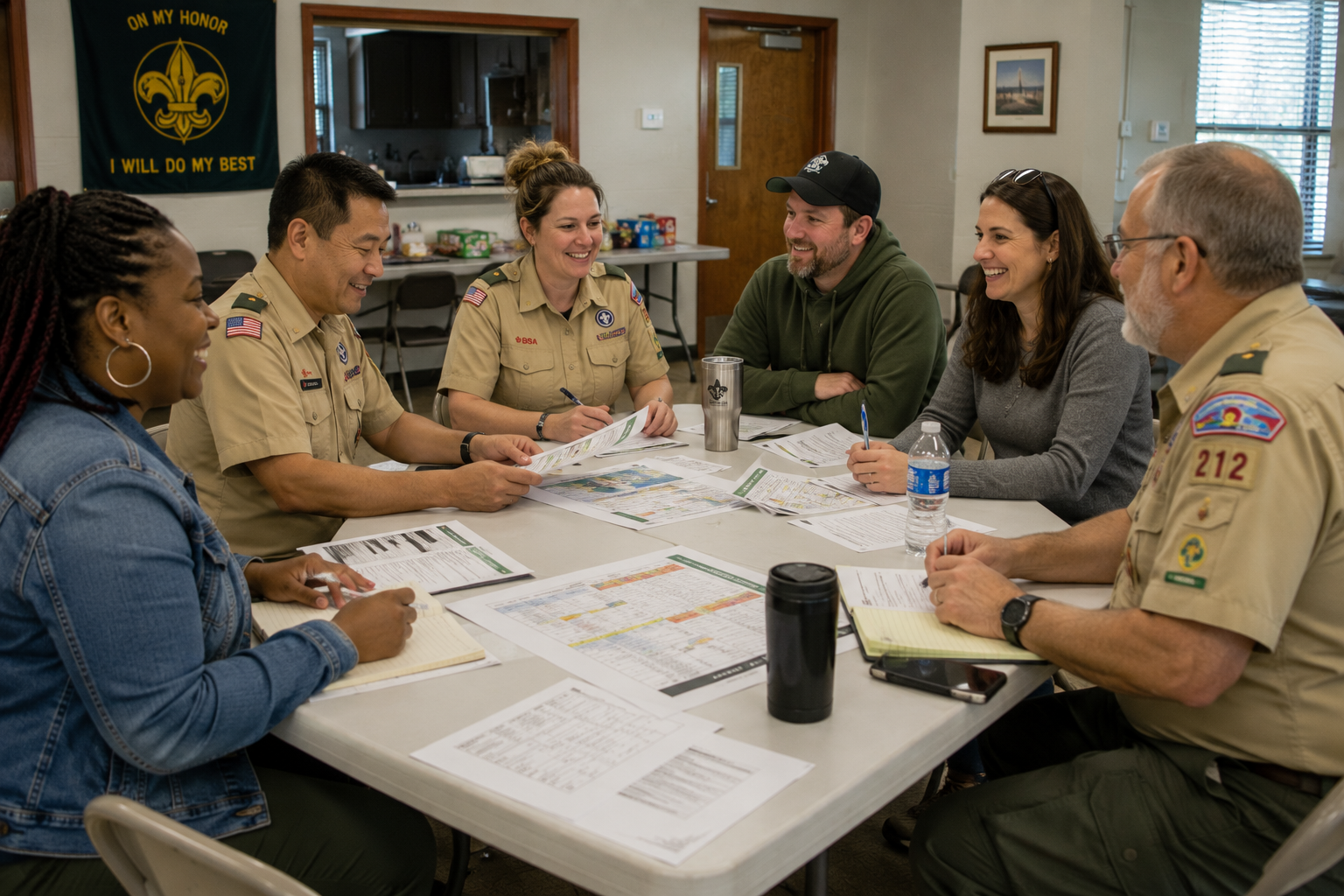
Troop committee meetings are the administrative backbone of any successful, scout-led Scouting program. While the scouts plan the adventures and lead the troop, the adult committee works behind the scenes to handle logistics, finances, equipment, and safety. Attending these monthly meetings is the best way for parents to stay informed and support the troop without needing to take on a direct youth-facing leadership role.
When you first join a Scouting program, you will quickly hear the phrase "scout-led troop." It is the golden rule of the Scouting experience. The youth should be the ones choosing the campouts, planning the menus, leading the meetings, and teaching skills to the younger scouts. Because of this heavy emphasis on youth leadership, many new parents mistakenly assume that the adults simply sit back in folding chairs and watch.
In reality, the role of adult leaders is highly active, just in a different capacity. In a Scouting troop, adults serve as mentors, advisors, and behind-the-scenes supporters rather than direct leaders. They ensure that scouts are having fun and advancing, as well as provide and guide scouts to ensure they are planning for future events. Scouts can dream up an incredible week-long backpacking trip, but they cannot legally sign a tour permit, reserve a campsite with a credit card, or safely tow a heavy equipment trailer down the highway. That is where the troop committee steps in.
Regular troop committee meetings are essential for keeping the troop running smoothly, safely, and within budget. Whether you are an officially registered committee member or just a parent wanting to understand how the troop operates, understanding the importance of these monthly gatherings is vital to the health of your scouting program.
Key takeaways
Understanding the purpose of the troop committee ensures your unit runs effectively and safely. Here are the most important things to know about adult involvement in a scout-led unit:
- The committee acts as the troop’s "board of directors," handling administrative tasks so the Scoutmaster can focus on mentoring the youth.
- Monthly meetings keep the troop’s finances, advancement records, and event logistics organized and transparent.
- You do not need to be a registered leader or wear a uniform to attend a committee meeting and contribute your ideas.
- Strong parental attendance at committee meetings directly translates to better resources and safer experiences for the scouts.
Table of Contents
What is a troop committee meeting?
A troop committee meeting is a regular, typically monthly, gathering of the adult volunteers who manage the administrative, financial, and logistical affairs of a Scout troop. If the troop were a business, the scouts would be the frontline employees, the Scoutmaster would be the floor manager, and the troop committee would be the board of directors.
The committee is overseen by the Committee Chair, who works closely with the Chartered Organization Representative to ensure the unit follows all local and national scouting policies. During these meetings, adults discuss the health of the troop, review the budget, organize upcoming fundraising efforts, and ensure that the Scoutmaster has all the physical resources needed to execute the scouts' chosen program.
These meetings take the burden of paperwork and administration off the shoulders of the Scoutmaster. This allows the Scoutmaster and their Assistant Scoutmasters to dedicate their limited volunteer time entirely to coaching, mentoring, and directly interacting with the youth.
Why a scout-led troop needs a strong committee
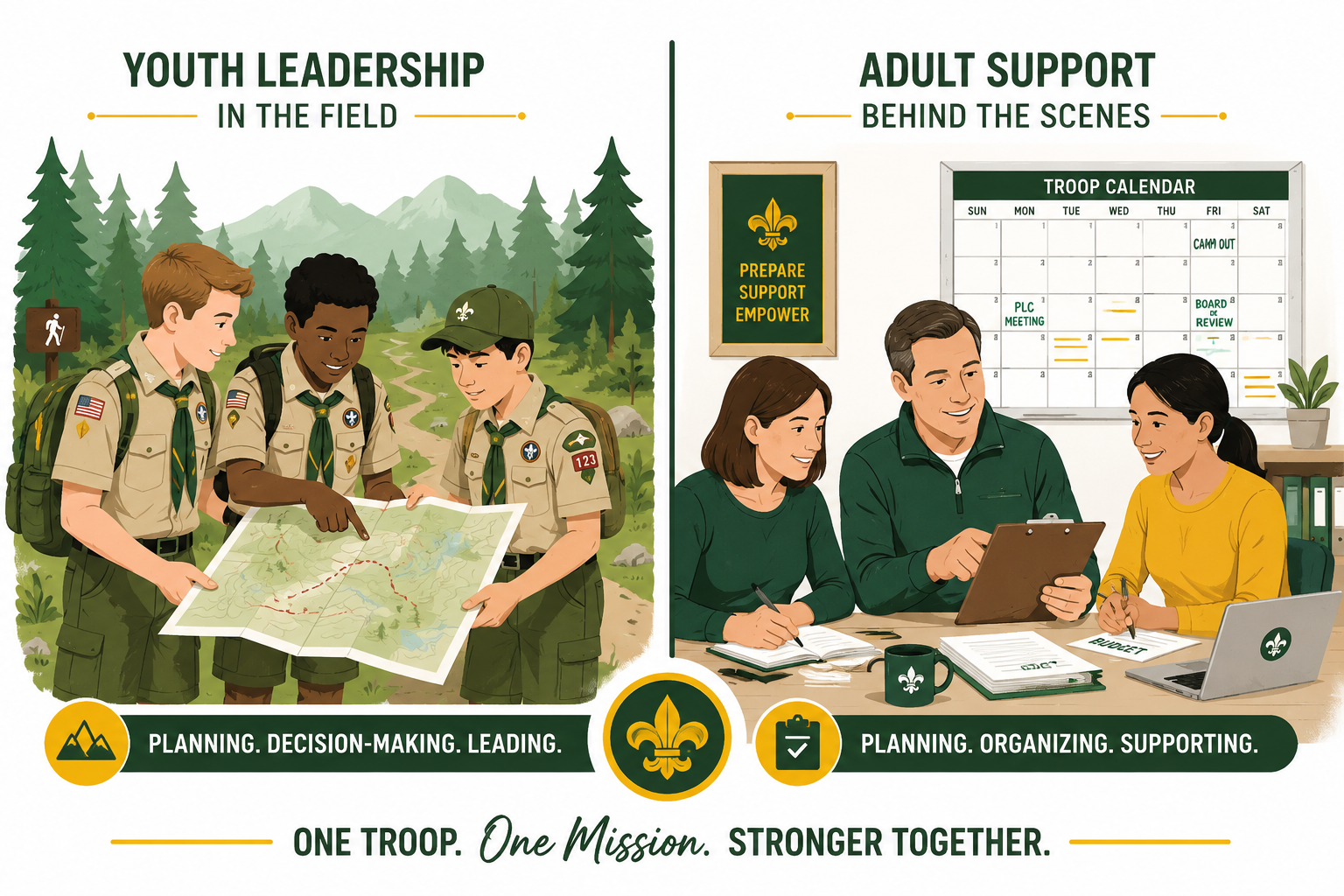
The concept of a "scout-led troop" is designed to teach youth leadership, decision-making, and responsibility. If adults step in and do everything for the scouts, the youth are deprived of valuable learning opportunities. However, true youth leadership requires a safe, structured, and legally compliant environment in which to operate.
The committee provides the guardrails that keep the scout-led vehicle safely on the road. Without a dedicated group of adults handling the background logistics, a troop will quickly suffer from disorganized records, depleted bank accounts, and burned-out Scoutmasters.
Understanding the division of responsibilities
To better understand why the committee is so vital, it helps to see how tasks are divided between the youth leadership (the Patrol Leaders' Council) and the adult committee.
| Task Category | Youth Responsibility (Scout-led) | Adult Committee Responsibility (Support) |
|---|---|---|
| Annual Planning | Brainstorm and select the monthly themes and campout destinations for the year. | Reserve the physical campsites, secure tour permits, and ensure transportation is available. |
| Finances | Determine the budget needed for a weekend patrol meal. | Maintain the troop bank account, manage dues, and organize the annual popcorn fundraiser. |
| Advancement | Sign off on basic Scout skills and track patrol progress. | Maintain the official advancement software, buy merit badges, and sit on Boards of Review. |
| Equipment | Clean the tents, organize the patrol boxes, and report broken gear. | Approve budget for new tents, purchase replacement stoves, and manage trailer registration. |
Scroll left or right to view the full table on smaller screens.
By cleanly dividing these responsibilities, the troop committee empowers the scouts to lead without overwhelming them with adult-level liabilities and logistics.
What happens at a monthly troop committee meeting?
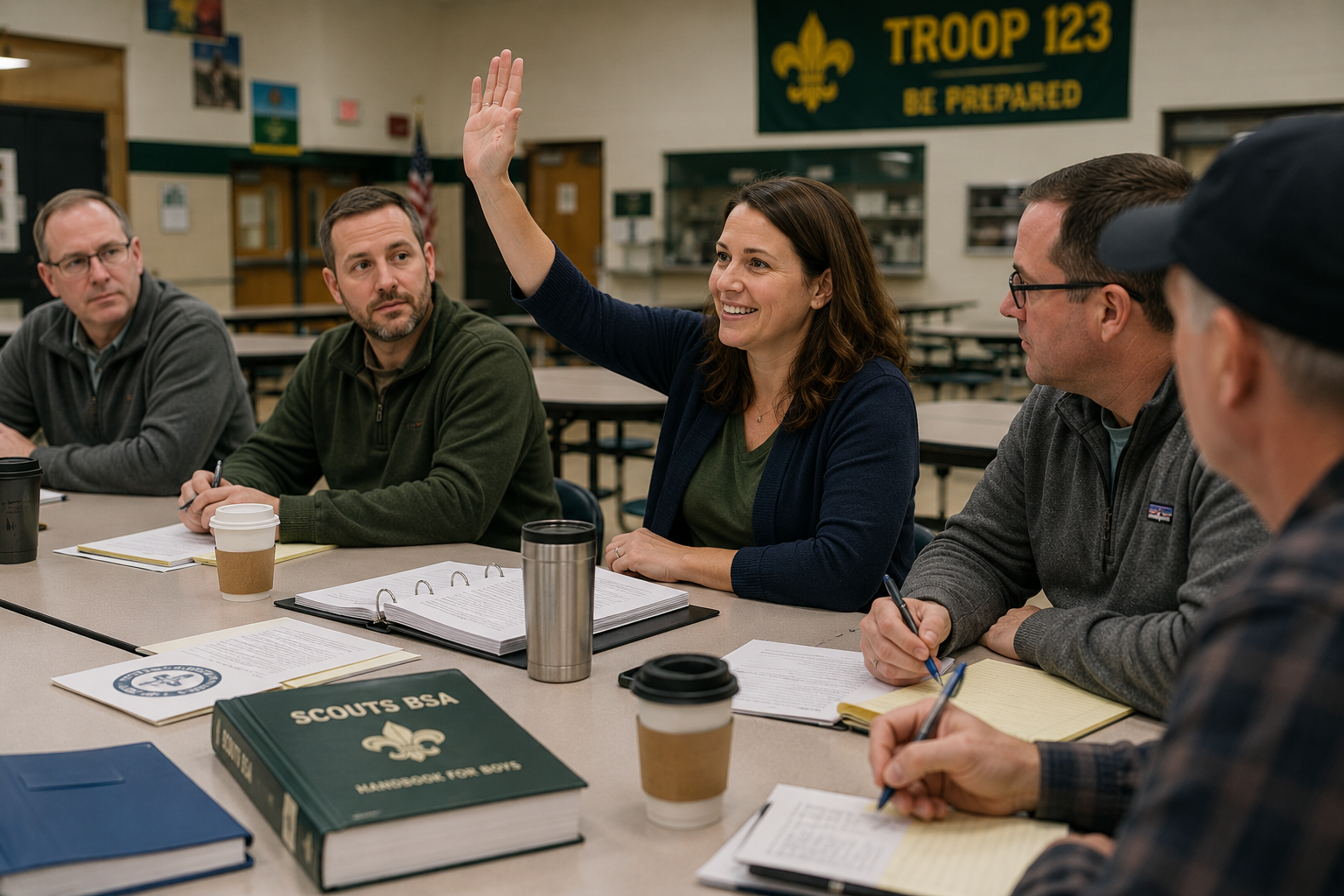
A well-run troop committee meeting is efficient, purposeful, and sticks to a predictable agenda. These meetings usually last between 60 and 90 minutes. While every unit operates slightly differently, a standard monthly meeting covers several core areas of troop management.
- Opening and approval of minutes: The Committee Chair opens the meeting, and the secretary briefly reviews the notes from the previous month to ensure everyone is on the same page.
- Senior Patrol Leader's report: Before the Scoutmaster speaks, the SPL can also update the Troop Committee. This is the only scout who can talk at a troop committee meeting. After giving their report and making any program requests, the SPL should leave the meeting so the adults can proceed with the administrative agenda.
- Scoutmaster's report: The Scoutmaster gives a brief update on the mood and health of the troop. They will highlight recent successes, discuss any disciplinary or safety concerns, and formally request any resources the youth leadership needs for the upcoming month.
- Treasurer's report: The treasurer provides an update on the troop's bank balance, outstanding dues, and the financial performance of any recent fundraising events.
- Advancement report: The advancement chair updates the committee on which scouts are ready for a Board of Review, who has recently earned merit badges, and what awards need to be purchased before the next Court of Honor.
- Outdoor and activities update: The outdoor chair confirms the logistical details for the next campout. This includes confirming how many adults are driving, verifying that all health forms are collected, and ensuring the equipment trailer is ready.
- New business and open forum: The floor is opened to address new ideas, such as recruiting events, purchasing new gear, or planning for a high-adventure trip next summer.
Why every parent is encouraged to attend
One of the most common misconceptions in Scouting is that only registered, uniform-wearing leaders are allowed to attend committee meetings. In reality, troop committee meetings are open to all parents, and your attendance is highly encouraged.
Transparency and communication
When parents attend committee meetings, they gain a clear understanding of how the troop operates. You will hear exactly how your scout's dues are being spent, why certain rules are enforced, and what the long-term goals of the troop are. This transparency builds trust between the adult leadership and the parent body.
Bite-sized volunteering opportunities
Many parents hesitate to get involved because they cannot commit to camping every weekend or teaching scout skills on a Tuesday night. Attending a committee meeting allows you to volunteer in much smaller, manageable ways. You might hear the committee mention they need someone to make a few phone calls to reserve a pavilion, or someone to pick up a box of merit badges from the local scout shop. You can raise your hand for a single, one-off task that takes only an hour of your time, providing immense relief to the core leadership.
Building a stronger community
Scouting is not just a community for the youth; it is a community for the parents, too. Sitting around a table once a month with other parents fosters friendships and a shared sense of purpose. When parents know and trust one another, organizing carpools, managing fundraisers, and handling troop challenges becomes incredibly easy.
How to run an effective committee meeting
If you are a Committee Chair looking to boost parent attendance, the most important thing you can do is respect their time. A disorganized meeting that drags on for three hours will guarantee that parents never return.
To keep troop committee meetings productive, always distribute an agenda a few days in advance. Stick to the scheduled start and end times rigidly. If a topic requires a deep, lengthy debate—such as rewriting the troop's bylaws or planning a massive two-week trip to Philmont—consider spinning that discussion off into a separate, dedicated subcommittee meeting rather than holding the entire monthly meeting hostage.
Remember to keep the tone positive and welcoming. When new parents show up, pause to introduce them, explain any scouting acronyms you use, and make sure they feel their presence is valued.
The backbone of a successful Scouting program
While the scouts are the ones out on the trail, setting up tents, and building campfires, the adult troop committee is the steady foundation that makes it all possible. Scout-led does not mean adult-free; it simply means the adults have shifted their focus from directing the youth to supporting the environment around them.
By handling the paperwork, balancing the budget, and organizing the logistics, the committee ensures the scouts have the freedom to lead, learn, and occasionally fail safely. If you have been sitting in the parking lot during your child's scout meetings, consider stepping inside and attending the next troop committee meeting. Your unique skills, perspective, and even just an hour of your time can make a massive difference in delivering an unforgettable Scouting experience for the youth.
Frequently asked questions on troop committee meetings
How long should a troop committee meeting last?
A well-organized committee meeting should typically last between 60 and 90 minutes. Sticking to a strict agenda and a set end time respects the volunteers' schedules and encourages more parents to attend regularly without fear of the meeting dragging on.
Do I need to be a registered leader or wear a uniform to attend?
No, you do not need to be a registered leader or wear a uniform to attend a troop committee meeting. These meetings are open to all parents of scouts in the unit. Attending is a great way to stay informed and see if you would like to volunteer for small tasks without making a major commitment.
What is the difference between the Scoutmaster and the Committee Chair?
The Scoutmaster is responsible for the "program" side of the troop, working directly with the youth to train them, guide their leadership, and ensure safety on outings. The Committee Chair acts more like a CEO or board president, managing the adult volunteers, handling the administrative paperwork, and ensuring the Scoutmaster has the resources needed to succeed.
Can scouts attend the troop committee meeting?
Usually, committee meetings are for adult administration. However, it is highly encouraged for the Senior Patrol Leader (the top youth leader) to briefly attend the beginning of the meeting. They can present the youth's monthly report, request budget approvals, and then excuse themselves while the adults handle the rest of the administrative agenda.
Content Disclaimer - DigitalScouter.org is an independent blog created to share practical tips, ideas, commentary, experiences, and resources for Scouts, leaders, parents, volunteers, and others interested in supporting youth-led Scouting programs. The information published on this website is intended for general informational and educational purposes and should not be considered official Scouting guidance.
DigitalScouter is not affiliated with, endorsed by, sponsored by, or operated by Scouting America, any local council, district, lodge, troop, pack, crew, ship, chartered organization, or any other Scouting entity. This website is maintained independently, and the opinions, recommendations, interpretations, and viewpoints expressed are those of the author or contributor and do not necessarily reflect the official positions, policies, or guidance of Scouting America or any other Scouting organization.
While we strive to provide accurate, helpful, and up-to-date information, Scouting policies, procedures, requirements, and program guidance may change over time. DigitalScouter does not guarantee that all content is complete, current, accurate, or applicable to every Scouting unit, council, district, lodge, chartered organization, or individual situation.
Most images on DigitalScouter.org are created using AI. Because of this, certain details may occasionally look unusual, inaccurate, or slightly unrealistic. These images are meant to help illustrate the topic, not represent actual Scouting events unless stated otherwise.
For official policies, procedures, requirements, safety standards, advancement guidance, Youth Protection policies, training materials, and program information, readers should always consult the most current Scouting America publications, handbooks, official websites, and documentation. When questions arise regarding interpretation or implementation of official Scouting policies, readers should seek guidance from Scouting America resources and their local council, district, or unit leadership.